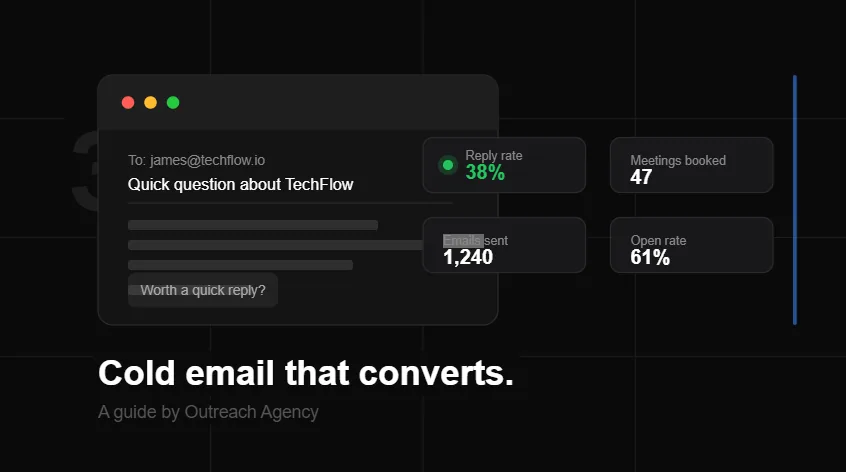
To write a cold email that gets replies, keep it short, open with something specific to the recipient, state one concrete outcome, and end with a low-friction question instead of a calendar link.
Why most cold emails fail
The average knowledge worker receives over 120 emails a day. Cold emails account for a growing share of that, and most of them sound identical. Generic openers, vague value propositions, and CTAs that ask for too much too fast.
The fix is not a better template. It is a different approach to personalisation and targeting. Start with who, not what.
The subject line: one job
The subject line has exactly one job: get the email opened. It needs to be specific enough to be relevant and short enough to be readable on mobile.
What works: Questions that reference something specific to the recipient, short statements that imply relevance, or pattern interrupts that are genuinely unusual.
What doesn't work: "Quick question", "Following up", "Hope this finds you well."
The opener: earn the next sentence
The first sentence of your email determines whether the prospect reads the second. Do not introduce yourself. Do not explain what your company does. Start with something specific to them.
The value proposition: one specific outcome
Name one specific outcome your best clients get, with a number attached. Not "we help companies improve their outbound", but "we helped [similar company] book 14 qualified calls in 6 weeks from a cold list."
Specificity signals credibility. Vague claims signal that you are sending the same email to everyone.
The CTA: reduce friction to zero
High-friction: "Can we jump on a 30-minute call this week?"
Low-friction: "Would it make sense to share how we'd approach this for [Company]? Happy to do it via email if that's easier."
The lower the friction, the higher the reply rate. Let the reply start the conversation, not your calendar link.
The follow-up sequence
Our top-performing campaigns achieve 35%+ reply rates across LinkedIn and cold email combined. The consistent factors: a tight ICP, high-personalisation openers, a single clear CTA, and a three-touch sequence.
Want this run for you? See our cold email agency service.